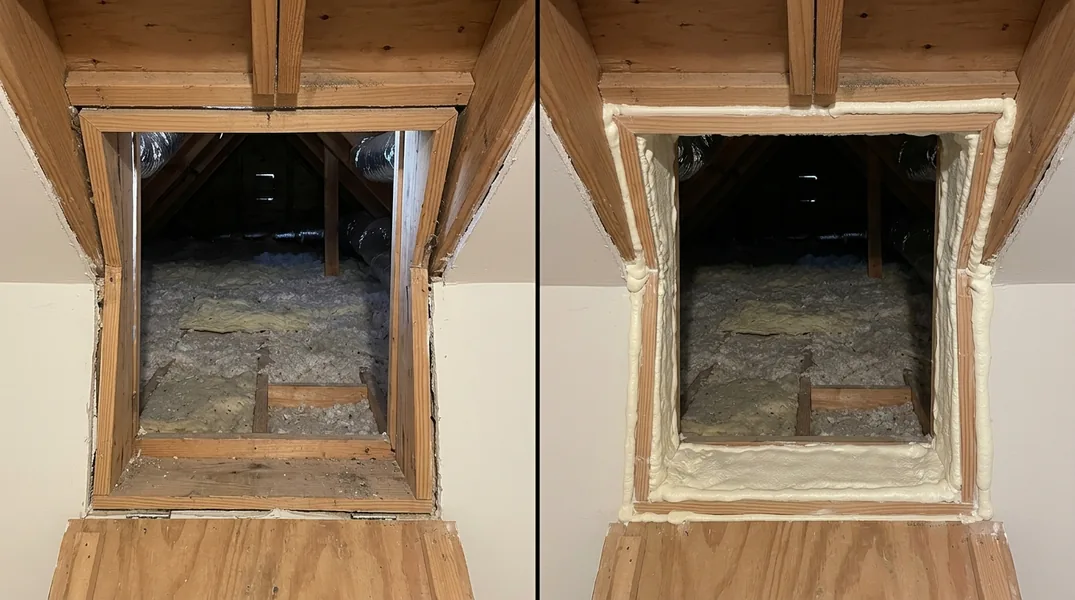
Understanding Spray Foam Attic Insulation Types
When homeowners in Tallahassee think about upgrading their attic insulation, spray foam has become one of the most popular choices. But not all spray foam is created equal. The two main categories, open cell and closed cell, offer distinctly different benefits and drawbacks that can significantly impact your home's comfort, energy bills, and long-term performance.
Attic spray foam insulation works by expanding and hardening inside your attic space, creating an airtight seal that traditional fiberglass or cellulose cannot match. This air sealing capability is what makes spray foam so effective at reducing energy loss. However, the type of foam you choose will determine how much it expands, how much moisture it allows through, and ultimately how well it performs in Tallahassee's warm, humid climate.
What Is Open Cell Spray Foam Insulation?
Open Cell Spray Foam Insulation has a lower density and a softer, more flexible texture once cured. Think of it like a sponge with millions of tiny interconnected pockets. Because these cells are open, air and moisture vapor can pass through the material. This characteristic makes open cell foam an excellent sound dampener and allows it to be more forgiving during installation, as it continues to expand slightly even after application begins.
One major advantage of open cell foam is its lower cost compared to closed cell alternatives. It typically costs between 50 to 70 percent less per board foot, making it an attractive option for homeowners working within a tighter budget. Additionally, open cell foam is easier to cut and work with, which can reduce labor costs during installation. However, the moisture-permeable nature means it won't provide a vapor barrier on its own, which is an important consideration for attic applications.
Understanding Closed Cell Spray Foam Insulation
Closed Cell Spray Foam Insulation is denser and more rigid, with cells that are completely sealed from one another. This structure creates a true vapor barrier, meaning moisture cannot easily pass through the material. Closed cell foam has a higher R-value per inch (typically R-6 to R-7 versus R-3.5 to R-3.6 for open cell), so you need less material to achieve the same insulation performance.
The superior moisture resistance of closed cell foam makes it particularly valuable in humid climates like Tallahassee, where attic moisture can become a serious problem. This foam also provides structural rigidity and can actually strengthen roof decking when applied to the underside of roof sheathing. The trade-off is cost. Closed cell foam typically runs two to three times more expensive than open cell, and the material itself is more rigid and challenging to install, which can add to labor expenses.
Sealed Attic Insulation: Why Air Sealing Matters
One of the primary reasons homeowners choose spray foam for attic spray foam insulation is its ability to create a sealed attic insulation system. Unlike fiberglass batts or blown-in cellulose, which leave countless small gaps around framing members, pipes, and electrical penetrations, spray foam expands to fill every crack and crevice. This air sealing is crucial because air leakage through an attic can account for 15 to 25 percent of a home's total energy loss.
When you create a properly sealed attic insulation system, you're not just improving insulation value, you're also improving indoor air quality and reducing moisture infiltration. In Florida's hot, humid climate, controlling moisture in the attic is essential to prevent mold growth, wood rot, and pest problems. Both open and closed cell foams seal air leaks effectively, but closed cell provides the added benefit of moisture blocking, making it the superior choice for Tallahassee homes.
Unvented Attic Spray Foam: Creating a Conditioned Space
When you apply spray foam to the underside of your roof sheathing, you're creating what's called an unvented attic spray foam system. This approach brings the attic into your home's conditioned space, meaning it's heated and cooled just like your living areas. This strategy has gained popularity because it can improve HVAC efficiency and prevent the extreme temperature swings that occur in vented attics.
Unvented attic systems work best with closed cell foam because it acts as a vapor barrier, preventing warm, humid air from the living spaces below from entering the attic and condensing on the roof deck. Open cell foam can be used in unvented attics, but only if proper ventilation is maintained or if you accept that moisture will pass through the foam (which requires careful design). For most Tallahassee homes, closed cell foam in an unvented attic configuration provides the most reliable, trouble-free performance.
Attic Spray Foam Insulation Cost in Tallahassee: What to Budget
Understanding the financial investment required for spray foam is essential for homeowners planning an attic upgrade. Open cell spray foam typically costs between 40 to 60 cents per board foot, while closed cell runs 90 cents to 1.50 dollars or more per board foot. For a typical 1,500 square foot attic with an average depth of 5 to 6 inches, you might expect open cell costs between 3,000 to 5,000 dollars and closed cell between 6,000 to 12,000 dollars, depending on local market conditions and your specific attic configuration.
While closed cell foam carries a higher initial investment, many homeowners find the value justifies the cost. The superior R-value means you need less material, the moisture protection prevents future problems, and the energy savings accumulate year after year. To get an accurate picture of pricing for your specific home, contact Tallahassee Spray Foam Insulation at (850) 273-4971 for a free estimate. Our team will assess your attic, discuss your climate concerns, and provide transparent costs for both options.
Which Type Is Right for Your Tallahassee Home?
The choice between open cell and closed cell spray foam ultimately depends on your specific situation, priorities, and budget. If you're primarily concerned with cost and your attic has good ventilation potential, open cell foam can provide solid insulation performance. It's also a good choice if you're insulating interior walls or other areas where moisture vapor transmission isn't a critical concern.
For most Tallahassee attics, however, closed cell foam is the more appropriate choice. Our region's hot, humid climate means moisture management is paramount. Closed cell foam's vapor barrier properties, superior R-value, and structural benefits make it worth the investment. If you're planning to create an unvented attic or want maximum protection against moisture-related issues, closed cell is clearly the better option.
The best way to determine which foam type suits your home is to have a professional evaluation. Tallahassee Spray Foam Insulation specializes in both Open Cell Spray Foam Insulation and Closed Cell Spray Foam Insulation, and our experienced team understands the unique demands of attic insulation in Florida. We'll evaluate your current attic condition, discuss your energy goals, and recommend the solution that delivers the best long-term value for your home. Reach out today at (850) 273-4971 or request a free estimate to get started.
Looking for a professional spray foam insulation contractor in Tallahassee? Tallahassee Spray Foam Insulation responds fast for all your spray foam insulation needs.
Get a Free Quote