Understanding IECC Zone 2A and Tallahassee's Climate Challenge
Tallahassee sits squarely in IECC (International Energy Conservation Code) Zone 2A, a climate classification that comes with unique insulation demands. This zone is characterized by hot, humid summers and mild winters, creating an environment where moisture control becomes just as critical as thermal resistance. Most homeowners focus solely on keeping heat out during summer months, but they overlook the insidious threat that humidity poses to their home's structural integrity and energy efficiency.
The challenge in IECC Zone 2A isn't just about R-value. It's about vapor management. Tallahassee's high humidity levels mean that traditional fiberglass or cellulose insulation can absorb and trap moisture, leading to mold growth, wood rot, and reduced insulation performance. This is why many local homeowners are turning to spray foam solutions that address both thermal and moisture barriers simultaneously. The right insulation strategy for our region must account for the constant battle against humidity that runs from spring through fall, and even into winter during our occasional warm spells.
Why Crawl Space Insulation Matters More in Humid Climates
Your crawl space is often the forgotten frontier of home insulation, yet it represents one of the largest sources of energy loss and moisture infiltration in homes across the region. Unlike conditioned attics, crawl spaces are semi-exposed to outdoor conditions, making them particularly vulnerable to humidity and temperature fluctuations. In IECC Zone 2A, a poorly insulated or uninsulated crawl space becomes a pathway for humid air to enter your home, forcing your air conditioning system to work overtime and creating an environment where mold and mildew thrive.
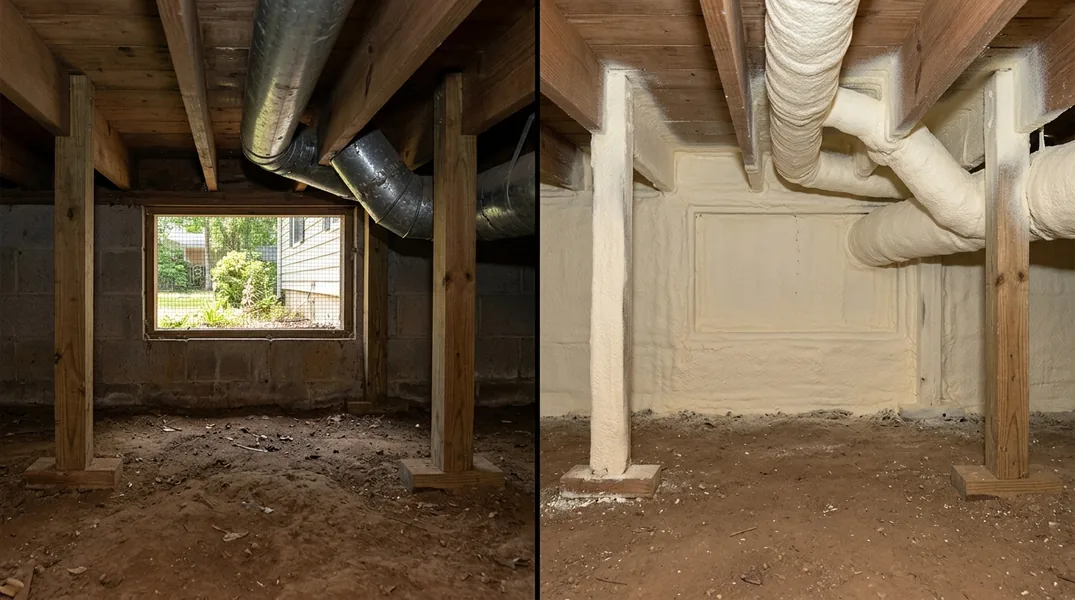
Crawl space spray foam addresses this problem head-on by creating an impermeable barrier that blocks moisture before it ever reaches your living spaces. The best insulation for crawl space applications in humid climates like ours combines high R-value with vapor impermeability. Traditional batt insulation or fiberglass rolls fail in this regard because they're designed to allow some air movement, which is counterproductive in a moisture-rich environment. When you invest in proper crawl space spray foam, you're not just improving comfort; you're protecting your home's foundation and extending the lifespan of structural components.
Closed Cell Spray Foam Insulation: The Superior Choice for Moisture Control
Closed Cell Spray Foam Insulation is the gold standard for homes in IECC Zone 2A, and for good reason. This type of foam has a density of approximately 1.5 to 2 pounds per cubic foot and features millions of closed cells that trap air while simultaneously blocking moisture vapor. Unlike open-cell foam, which remains somewhat permeable, closed-cell spray foam creates a true vapor barrier that prevents humid air from penetrating your insulation and causing damage behind walls and in crawl spaces.
The performance difference is substantial. Closed Cell Spray Foam Insulation delivers R-values between 6 and 7 per inch, meaning you achieve excellent thermal resistance in a thinner application. This is particularly valuable in crawl spaces where headroom is limited and in wall cavities where space constraints exist. Beyond the numbers, closed-cell foam provides structural reinforcement to walls and can even increase the racking strength of a building envelope. For homeowners in humid climates, this combination of moisture blocking, thermal performance, and structural benefits makes closed-cell foam the most cost-effective long-term investment.
Pier and Beam Insulation: Protecting Your Home's Foundation
Many homes in the Tallahassee area were built on pier and beam foundations, a construction method that leaves the underside of the home exposed to outdoor air. While this design offers advantages for ventilation and pest control when properly managed, it also creates a significant thermal and moisture challenge. Without proper insulation, your floors lose heat in winter and gain heat in summer, leading to uncomfortable cold floors and higher energy bills. Additionally, the open space beneath the home becomes a superhighway for humid air to infiltrate your living spaces.
Pier and beam insulation using spray foam solves both problems simultaneously. By applying Closed Cell Spray Foam Insulation to the rim joists and band boards, you create a thermal break that eliminates cold floors and reduces the workload on your HVAC system. The moisture-blocking properties mean that humid air can't penetrate the insulation layer, keeping your crawl space dry and your indoor air quality high. This is especially important in IECC Zone 2A, where humidity levels regularly exceed 70 percent during warmer months. Homeowners who address pier and beam insulation often report noticeably warmer floors in winter and more consistent indoor temperatures year-round.
Cold Floors Insulation: Why Your Feet Are Cold and How to Fix It
Cold floors are a common complaint in many Tallahassee-area homes, particularly those built over crawl spaces or with inadequate rim joist insulation. The problem stems from uninsulated or poorly insulated areas where outside air can flow directly beneath your flooring. In winter, this allows cold air to pull heat from your floors, creating uncomfortable conditions and forcing you to raise your thermostat, which drives up energy costs. In summer, the situation reverses, with warm, humid air infiltrating from below and making your air conditioning work harder to maintain comfort.
The solution is targeted cold floors insulation that addresses the root cause rather than just the symptom. Spray foam insulation applied to the underside of rim joists, band boards, and the perimeter of crawl spaces creates an effective thermal and moisture barrier. This prevents air leakage and heat transfer, keeping your floors at a comfortable temperature regardless of the season. Many homeowners are surprised by how much warmer their floors feel within days of having spray foam applied. Beyond comfort, this improvement translates to measurable energy savings, with many homeowners reporting reductions of 10 to 15 percent in their heating and cooling costs. If you're tired of cold feet and high utility bills, addressing your insulation gaps is one of the most practical investments you can make.
Getting Your Free Estimate and Understanding Spray Foam Pricing in Tallahassee
If you're considering spray foam insulation for your crawl space, pier and beam foundation, or cold floor problem, the first step is understanding what you're investing in. Spray foam insulation pricing varies based on several factors, including the square footage of the area to be insulated, the type of foam selected (closed-cell versus open-cell), and the complexity of the installation. Rather than guessing at costs, reach out to Tallahassee Spray Foam Insulation for a detailed assessment of your specific situation.
Contacting us for a free estimate is the best way to understand your options and get an accurate picture of investment and expected savings. Our team will evaluate your home's current insulation, assess moisture and humidity issues, and recommend the most effective solution for your climate zone and budget. Call us at (850) 273-4971 or visit our website to schedule your consultation. We serve homeowners throughout the Tallahassee area and are committed to helping you achieve a more comfortable, energy-efficient home that stands up to our region's unique climate challenges.
Looking for a professional spray foam insulation contractor in Tallahassee? Tallahassee Spray Foam Insulation responds fast for all your spray foam insulation needs.
Get a Free Quote