Understanding Your Insulation Options in Tallahassee
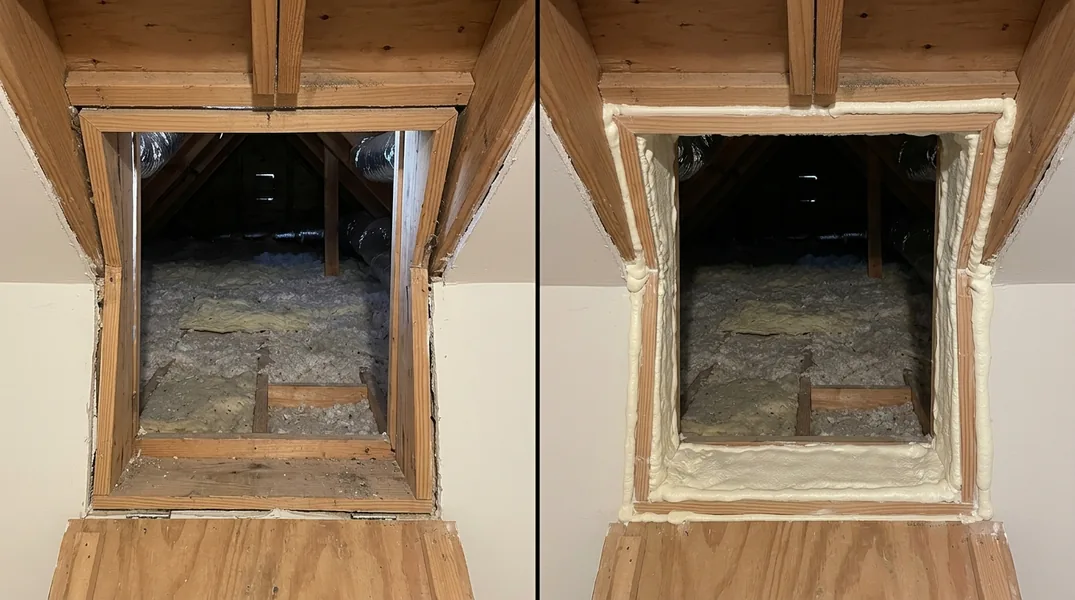
When it comes to improving your home's energy efficiency in Tallahassee, you'll encounter two primary strategies: air sealing and full spray foam insulation. Both address the same fundamental problem, heat loss and energy waste, but they work in different ways and deliver different results. Air sealing focuses on closing gaps, cracks, and penetrations where conditioned air escapes, while Attic Spray Foam Insulation provides both a thermal barrier and an air seal in one application.
The choice between these two approaches isn't always straightforward. Your decision depends on your home's current condition, your budget, your energy goals, and the specific challenges your attic faces. Understanding the strengths and limitations of each method will help you make an informed decision that maximizes your comfort and savings over time.
What Is Air Sealing and When Does It Make Sense?
Air sealing is a targeted approach that identifies and closes unwanted air leaks in your home. Common culprits include gaps around electrical outlets, ductwork penetrations, pipe chases, attic hatches, and the rim joist where your walls meet the foundation. A professional energy audit can reveal these problem areas using thermal imaging or blower door testing. Once identified, these gaps are sealed with caulk, weatherstripping, spray foam, or rigid foam board.
Air sealing is often less expensive than a complete spray foam retrofit and can deliver impressive energy savings if your home has significant air leakage. For homeowners in Bradfordville and surrounding areas with older homes or homes that have never been properly sealed, this step alone can reduce heating and cooling costs by 10 to 20 percent. However, air sealing alone doesn't add insulation value. If your attic's existing insulation is already thin or degraded, sealing air leaks won't solve that underlying problem. You may still feel temperature swings and experience higher utility bills than necessary.
Spray Foam Insulation R Value Per Inch and Coverage Requirements
One of the key advantages of spray foam is its superior insulation performance. Closed Cell Spray Foam Insulation delivers an R-value of approximately 6.0 to 6.5 per inch, while Open Cell Spray Foam Insulation provides about 3.5 to 3.6 per inch. These numbers are significantly higher than traditional fiberglass batts, which offer only 3.2 to 3.8 per inch. This means you need less material to achieve the same thermal resistance, making spray foam especially valuable in space-constrained areas like cathedral ceilings or rim joists.
Understanding how thick should spray foam be for your home depends on your local R-value requirements. Florida's building code typically recommends R-30 to R-38 for attic insulation, depending on your specific location and construction type. With closed cell foam at 6.5 per inch, you'd need only 5 to 6 inches to meet these requirements. With open cell foam, you'd need 8 to 11 inches. Spray foam also seals air leaks simultaneously, eliminating the need for separate air sealing work in most cases. This dual functionality often makes spray foam more cost-effective than the combination of air sealing plus traditional insulation.
R Value Requirements by State and How Tallahassee Fits In
Florida's insulation requirements are less stringent than states in colder climates, but that doesn't mean you should settle for minimal coverage. The state's building code establishes baseline R-value requirements, but many energy-conscious homeowners and builders exceed these minimums to maximize comfort and reduce long-term energy costs. In Crawfordville and throughout the region, homes built to code often still experience significant energy waste because the code represents a minimum standard, not an optimal one.
Tallahassee's subtropical climate means your home works hard during cooling season, with significant heating needs during winter months. Upgrading your insulation beyond the code minimum can pay dividends in both seasons. Many homeowners find that investing in spray foam to achieve R-38 or even R-45 in their attics yields faster payback periods than they initially expect, especially when combined with available tax credits and rebates. The higher the R-value, the more stable your indoor temperatures become and the less your HVAC system cycles, extending equipment life and reducing wear.
Insulation Tax Credits and Rebates Available to Tallahassee Homeowners
One often-overlooked advantage of upgrading your insulation is access to financial incentives. The federal government offers an insulation tax credit for homeowners who improve their home's energy efficiency, including spray foam insulation installations. This credit can cover a percentage of your material and labor costs, effectively reducing your net investment. Additionally, many utility companies in Florida offer insulation rebates to encourage energy-efficient upgrades. These programs can provide hundreds of dollars in direct rebates when you install qualifying insulation products.
Before you commit to any insulation project, contact your utility provider and review the IRS guidelines to understand what incentives apply to your situation. Tallahassee Spray Foam Insulation can help you navigate these programs and ensure your installation qualifies for maximum rebates and tax credits. When you factor in these financial incentives, the true cost of upgrading to spray foam becomes much more reasonable than the sticker price alone suggests. Many homeowners discover that their energy savings, combined with tax credits and rebates, result in a payback period of just five to seven years.
Making Your Decision: Air Sealing, Spray Foam, or Both?
The honest answer is that the best choice depends on your specific situation. If your home has never been professionally sealed and your existing insulation is adequate, starting with air sealing can deliver quick wins and measurable savings at a lower upfront cost. However, if your attic insulation is thin, compressed, or degraded, or if you want maximum energy efficiency and comfort, spray foam is the superior long-term investment. Spray foam provides both the air seal and the insulation in a single application, requires no future maintenance, and won't settle or degrade over time like traditional insulation.
For many homeowners in Woodville and throughout Tallahassee, the ideal approach is a comprehensive energy upgrade that combines targeted air sealing in accessible areas with spray foam in the attic and rim joist. This hybrid strategy delivers superior results while optimizing your budget. Whether you're considering air sealing alone, spray foam insulation, or a combination approach, the first step is a professional energy assessment. Contact Tallahassee Spray Foam Insulation at (850) 273-4971 to schedule your free estimate and learn exactly what your home needs.
Looking for a professional spray foam insulation contractor in Tallahassee? Tallahassee Spray Foam Insulation responds fast for all your spray foam insulation needs.
Get a Free Quote